
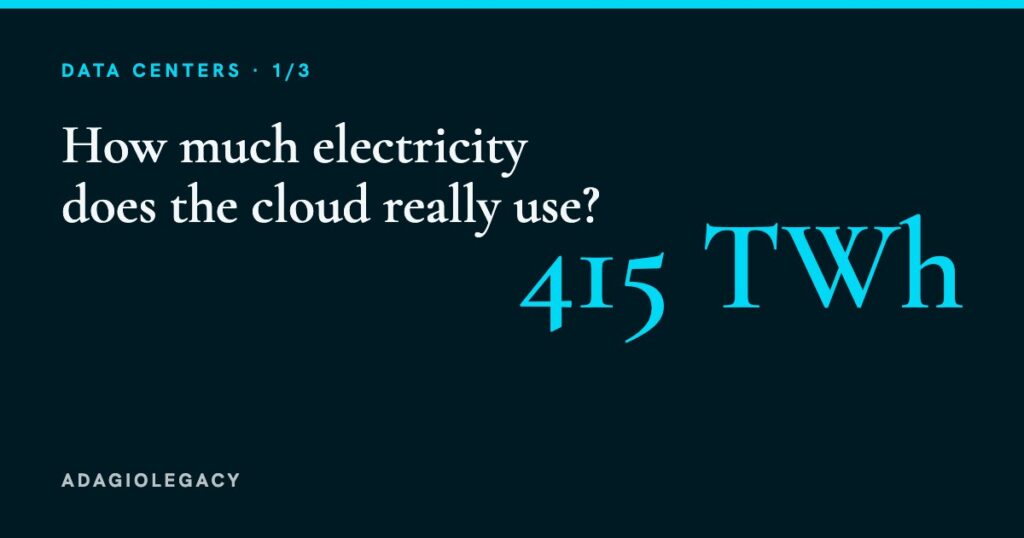
Your photos, emails, streaming shows and AI chats all live « in the cloud ». In reality, the cloud is made of very physical buildings: data centers. And they are using more and more electricity.
What is a data center?
A data center is a building full of servers that store and process data around the clock. It also includes everything that keeps them running: power, backup systems, networking and, above all, cooling, because servers generate heat nonstop.
The key numbers
According to the International Energy Agency (IEA):
- In 2024, data centers used about 415 TWh of electricity, roughly 1.5% of global consumption.
- The United States accounts for 45% of that, ahead of China (25%) and Europe (15%).
- By 2030, consumption is set to more than double to about 945 TWh, slightly more than Japan’s entire electricity use today.
- In the US, data centers account for nearly half of electricity demand growth between now and 2030.
Why AI is speeding everything up
Training and running AI models requires specialized, power-hungry servers. The result: ever-larger facilities, often clustered in the same areas. Nearly half of US data center capacity sits in just five regional clusters, which puts real pressure on local power grids.
The takeaway
The cloud isn’t a cloud. It’s concrete, cables and a lot of energy. So the real question is: do we keep building bigger, or do we make better use of what already exists, like the millions of underused home internet connections?
That’s what the rest of this series covers: the hidden risks of a centralized internet, then DePIN and the NX1.